My freshman year of high school, the only year I took art, I was assigned the task of making a sculpture that was at least four feet tall. To the best of my recollection, it could be anything we wanted and made from any materials. (Normal people made giant soda cans and person-sized pencils out of cardboard and paint. Y’know, simple shapes.) Being my overachieving self—and at the time having equally over-achieving friends—my best friend and I decided that we would work together to make sculptures of Mickey and Minnie Mouse, because why wouldn’t we do that? We spent hours and hours and hours on these nearly human-sized sculptures after school, forming the basic shapes out of chicken wire (I have never had so many cuts on my arms, even after losing a fight with my artificial Christmas tree last year) and covering it all with papier mâché, then finding ways to attach them to a plywood base and support them so they stood upright on their own without looking obviously and ridiculously supported.
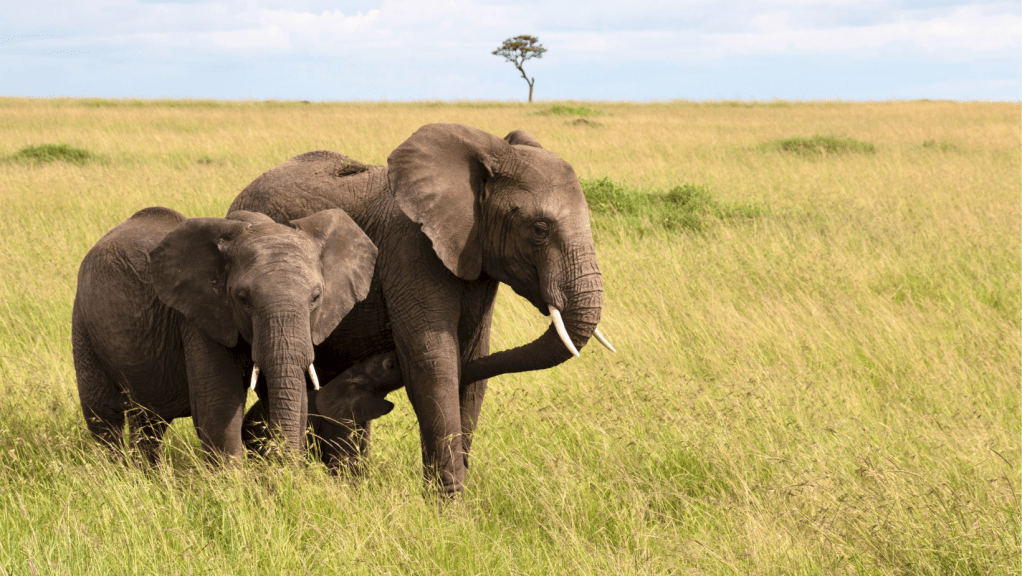
Now, I don’t know if you’ve ever studied the shape and proportions of Disney’s star rodents, but without their iconic coloring, they look, well, weird. Disproportionate. This can’t possibly be right even though I know it is weird. But I had the vision in my head of what they were going to look like, and that was good enough. I honestly thought they looked pretty great, all things considered, even if they were covered in ads for jewelers and local cleaning services. Anyway, as we were transporting our sculptures down the hall for the final step—covering them with colored tissue paper so that Disney wouldn’t sue us for out-of-character product placement and so that we might actually get an A for sculptures that looked like they were supposed to—an adorable second grader stopped us in awe and said, with utter sincerity, “I like your elephants!”
I was simultaneously amused and offended—how dare this child not recognize our genius? How dare she confuse our mice with elephants, the most opposite of God’s good creatures? Those utterly antithetical storybook characters? How dare she look upon our creation and willfully misunderstand!
Of course, once we added red and black and peach and pink, our sculptures actually looked like Mickey and Minnie and not large-snouted blobs of character, and, in a cool turn of events, we went on to win the art fair that year. In your face, second grader who I’m pretty sure is married with a kid now because time keeps passing despite my requests that it not. But still, her compliment/well-meant insult has stuck with me. I don’t think our sculptures looked much like elephants, though I suppose they did have large ears and long noses, but to this random child, these mid-process sculptures did not quite look like the end product they were supposed to be. Which didn’t mean they weren’t on the right track, and it didn’t mean we had done anything wrong, and it didn’t mean our vision was skewed. I’m sure you know where this long-winded life metaphor is going, but because we laughed off her comments and trusted the process, the end result was exactly what it was supposed to be and more.
I am a pro at starting projects. Novels, hobbies, crafts, home organizational undertakings. I’ve been crocheting the same blanket for about ten years now and still haven’t finished it. (That one, blessedly, still looks like a blanket mid-process.) There are a lot of reasons I start things and don’t finish them, including lack of sustained interest, a busy schedule, and just plain forgetting I started something, but the most pressing reason is that often my beautiful idea turns before my eyes into a misshapen elephant and I lose faith in the process, lose sight of the end goal and my ability to make it there in one sane piece, much less with a quality end product. Anything can trigger it: a criticism from a friend, taking a break and losing momentum, seeing someone else do the thing better, becoming aware of a previously unnoticed flaw, a shift in the weather. I was complaining to a friend the other day about the difficulty in writing decent poetry, how it was nearly impossible to write a good poem about joy or even everyday mundane frustration, and he told me it didn’t matter what the poem was about, as long as it contained some kind of discovery, as long as it was revelatory. If I knew how to magick my inner sight into turning shoddy elephants back into the multi-layered enthusiastic ideas they once were, I probably wouldn’t be writing this newsletter, and I’d have a multi-million dollar nonfiction book deal on the topic as well as about six published novels and three successful businesses. But hopefully my meandering here will be worthwhile in a small, revelatory, poetic sort of way.
I frequently wonder, when all my projects turn into elephants, if personal growth and creativity are inversely related, if the periods in which we are least creative are the ones in which we are changing most as humans. Oscar Wilde’s essay “The Critic as Artist” has a lot to say on the topic, and I highly recommend reading it. He discusses the relationship between the critical viewing of art and the creation of it, and how the two cannot really be separated. It is prescriptivist in the best ways, and a worthwhile argument for anyone who considers themself a creative type. He writes, at one point, “The contemplative life, the life that has for its aim not doing but being, and not being merely, but becoming—that is what the critical spirit can give us.” We become self-actualized, almost, or so the argument goes, by approaching the world with a detached and critical examination of everything around us, by forming our own opinions, by self-educating, and ultimately creating art out of it all. Art is an expression of the artist, a search for Truth, a thorough and critical examination of Life and everything in it for the sake of the artist himself as much as the audience. “It is so easy to convert others,” he writes. “It is so difficult to convert oneself. To arrive at what one really believes, one must speak through lips different from one’s own. To know the truth one must imagine myriads of falsehoods.” My question, though, is what comes about after that truth is found? Through what processes does that truth wrap itself around our soul and squeeze us into a different, more self-actualized shape?
One of my favorite movies is the indie commentary on education and art, Liberal Arts. In it, Zac Efron plays a manic pixie dream hippie who’s always there when our protagonist (the brilliant writer Josh Radnor) needs wisdom. The sagest of this wisdom comes in a monologue about caterpillars: “Caterpillars… they’re just scooting along, right? Being caterpillars. At some point, these cells show up, called imaginal cells. Scientists don’t know where they come from or why they appear. But these imaginal cells show up inside the caterpillar and say: ‘Get psyched, caterpillar! It’s butterfly-turning-into time!’ And what do all the other caterpillar cells do when these imaginal cells show up? […] They attack ’em! Try to kill ’em! They’re, like: ‘Screw you, imaginal cells. We’re happy being a caterpillar. Get lost!’ But eventually, the imaginal cells keep growing and overtake the destiny of the caterpillar, willing it into this cocoon. And then guess what happens next? The caterpillar turns into a butterfly! […] And that is why there is no reason to be afraid. Because everything is okay.”
Perhaps I’m just romanticizing my own creative blocks, calling them growth, when there’s nothing more to it than a busy schedule and a rhythmic, seasonal cycle of creative energy. I have a pile of half-finished, lumpy elephants staring me down, threatening to trample me—four or five novels, a folder of incomplete poems and scribbled down lyrics, a coffee-stained sketchbook of half-finished characters, that damn blanket—and I find myself stalled out on all of them, with the nebulous desire to create but no desire to work specifically on any one particular thing. It’s nice to think that I’m not simply useless right now, that I’m morphing into a butterfly, or out of my own elephantine stage. One of my favorite poets, Albert Goldbarth, writes, “We’re made of electric infinitycrackle that won’t stop branching forth until the brain is as large as the universe.” And isn’t that a lovely idea?
Early in “The Critic as Artist,” Wilde writes, “To have a capacity for a passion and not to realise it, is to make oneself incomplete and limited.” He talks of experiencing those passions through art, but it is one of the eternal struggles of humanity, I think, to name those passions and separate them from the general fugue of living before we can even begin to realize them. My creative elephants are loquacious, sure, and they have a bad habit of frequently asking are we there yet?, but the reason I have not yet been trampled by them is that they are rather aimless, unsure of where, precisely, they want to go. Perhaps—wouldn’t it be nice to believe?—this aimlessness is in fact the result of creative imaginal cells: in seeking my Truth and self-actualization, there’s nothing for it now but to cocoon and emerge a beautiful butterfly, only to do it all again in two weeks when some other question nags at the back of my caterpillar brain and inspires me to return to some project or other. Of course, it is also very nearly winter, so my caterpillar brain has to contend with my small rodent brain, which wants to eat my weight in carbs and curl up in a den until spring.
The life of a creative is the constant cycle between believing that you are the greatest thing to ever put art to paper and believing that nothing you do will ever matter and everyone will hate everything you ever make, if you can ever even finish making something. And every creative has different solutions to this, with Oscar Wilde firmly on the side of intelligence triumphing: “All fine imaginative work is self-conscious and deliberate. No poet sings because he must sing.” Rainer Maria Rilke on the side of the incontrovertible and ineffable creative spirit: “If one feels one could live without writing, then one shouldn’t write at all.” (Wilde: “All bad poetry springs from genuine feeling.”) And most other less pretentious authors and artists on the side of just sitting down and doing the thing until the thing is done and you feel kind of okay about it. I personally like to live by the advice of Parks and Rec’s Leslie Knope: “There’s nothing we can’t do if we work hard, never sleep, and shirk all other responsibilities in our lives.” But all creative philosophy is nothing in the face of sitting down to a blank page or a recently morphed elephant and feeling the frustration of creative constipation beginning to boil inside of you. It’s at those points I hold tight to the idea of creative cocooning, or this advice I once heard Anne Lamott give in a lecture on creativity and life: “Stay one step ahead of the abyss. If the abyss opens up in front of you, go to Ikea. Get a nice area rug.”
Through art we have the ability to become, whatever that looks like for you, and I think seeing elephants is probably just part of that process. Maybe it’s not that growth and creativity are inversely related, but rather that they’re obversely related, two sides of the same creative coin, constantly flipping at an unpredictable rate as we produce static, artistic masterpieces and turn ourselves into living, breathing ones. The process is messy, and complicated, and eternal, and sometimes there’s nothing for it but to buy a nice area rug and forget about the abyss for a bit while we sit in our cocoons and build up the courage to flutter confidently into it again. There’s solace to be found in this state in other creatives going through the same process, I think, which is why, when I’m at my creative lowest, I voraciously read and watch movies and listen to music and take in any art I can get my hands on. One of my more recent favorite songs, “Dangerous Strangers” by Johnny Gallagher, has the line, “and yet with all this love, I want to rip it up, / I want to get dressed up, I want to destruct,” which to my mind is one of the most perfect depictions of the chaotic creative mindset that sometimes takes over my (theoretically) more rational self. Hand in hand with the line “some nights I’m just fine, others I’m stark raving sad,” this song keeps me company when every project looks like three guys in an elephant suit, mocking me while they impersonally sip whiskey and smoke a cigarette. The song wraps up with the repeated line, “I’m gonna be okay, I’m gonna be alright,” and I have to believe it’s true. I have to believe that like Zac Efron said, “there is no reason to be afraid. Because everything is okay.”
Laugh it off, trust the process, and eventually all the elephants will turn out okay.
Stay excellent,
Kristen
Johnny Gallagher is a quality human (I assume; I don’t actually know him personally, sadly) and amazing artist, and here’s a link to the song I referenced. Highly recommend listening to all of his music. He also shared this embroidery of his lyrics I did, which made my week.
Whenever I begin to wonder what the point of writing even is, I always come back to this Nabokov quote from the beginning of Laughter in the Dark:
That is the whole of the story and we might have left it at that had there not been profit and pleasure in the telling; and although there is plenty of space on a gravestone to contain, bound in moss, the abridged version of a man’s life, detail is always welcome.
As always, here’s the latest episode of our podcast, in which Rae and I argue about good vs evil stories. It’s a fun one.
This instagram account that features quotes from artists of all kinds is always good creative inspiration for me when I need it.
As I’ve mentioned before, my website has started publishing short fiction with the intent to make the world of short stories a slightly happier place, and this sci-fi story that was published recently is a wonderful read. Check it out!
Featured image by Craig Stevenson on Unsplash
 Earthbound, But Aspiring